
why do we
Play so much?
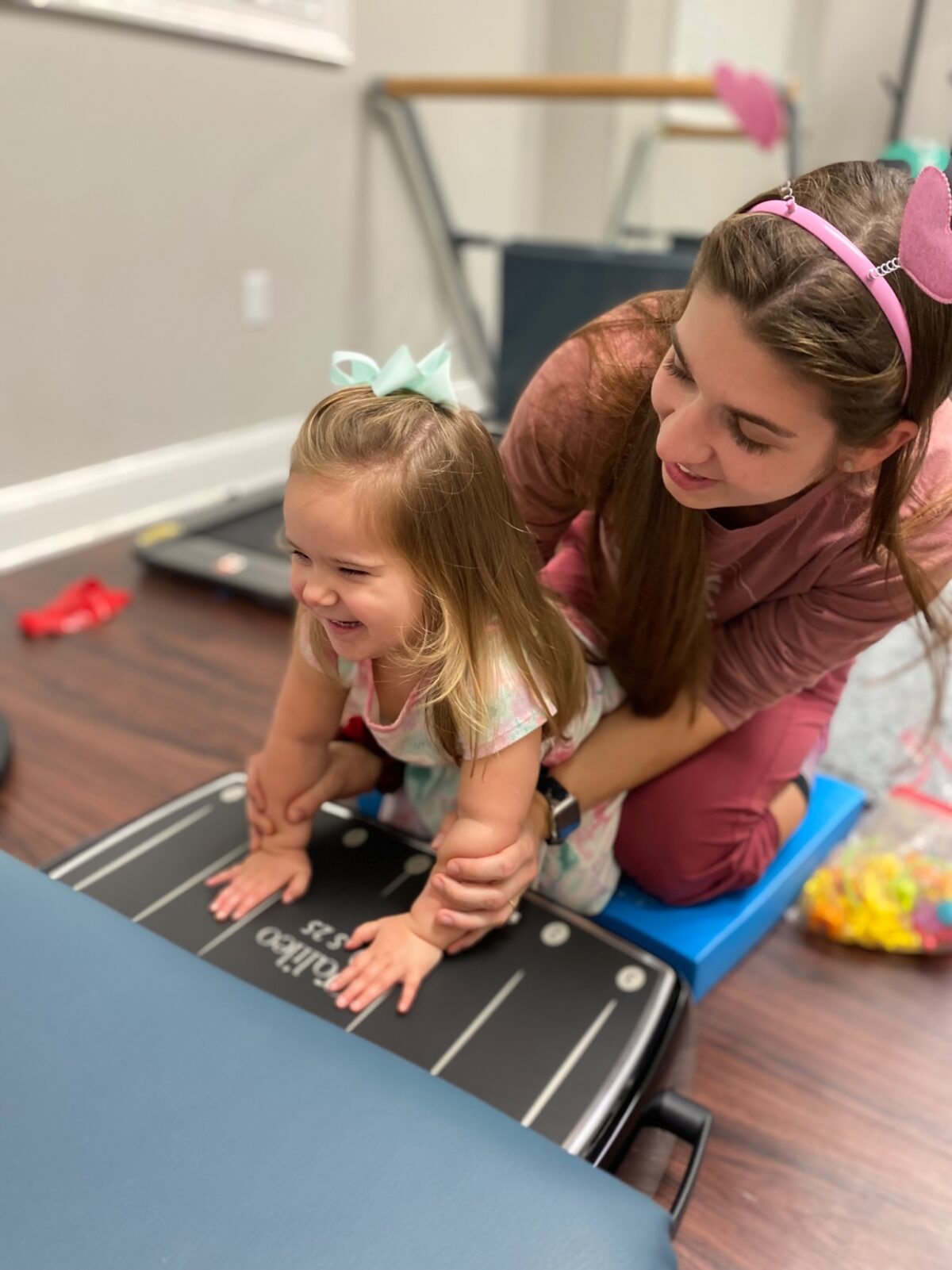
Don’t count play time as downtime, your child is developing the necessary skills needed to become a functional member in the community. Play is a self-motivating activity that typically results in pleasure and enjoyment. The development of skills utilized in play begin in early infancy and will continue to develop throughout a child’s life. Play is a voluntary act grouped into stages based on the child’s ability to sequence, problem solve, take risks and generalize these skills to different activities and stages in their life.
The 6 Important Stages of Play
- Unoccupied play: birth-3 months. Your baby begins to discover they can move their arms, legs, hands, feet
- Solitary play: birth-2 years old. Your child plays on their own. Interest in playing with other children is emerging
- Spectator or Onlooker play: 2 years old. Your child will begin to observe and watch other children play, but will not engage with them
- Parallel play: 2+ years old. Your child plays side-by-side with another child, without any direct interaction
- Associative play: 3-4 years old. Your child will start to interact with other children who are playing with similar toys
- Cooperative play: 4+ years old. Your child begins to share ideas with other children and follow established rules (i.e. waiting their turn). This is when your child will begin to show an interest in other other children and the activity


What is floortime?
At MPPT, our clinicians always strive to provide client-centered, holistic, strengths-based approach to therapy to help children grow and develop. One way we are able to do this, is through the use of the DIRFloortime approach. This approach enables our team to engage with children and develop their social, emotional and play skills. These skills are foundational to overall development and interacting with the world around us. It is imperative to our clinicians that parents/caregivers understand ways to promote these skills when not in structured therapy.
What is DIRFloortime?
DIRFloortime is an “inside-out” approach that targets children’s development through the use of relationships. With this “inside-out” approach, therapists and parents observe what is going on beneath the surface of behaviors and attempt to address the underlying causes of behaviors. Using affectively charged relationships, therapists and parents are able to engage with the child and create emotional connections. This serves as the basis for the child developing intrinsic motivation. With the use of DIRFloortime, therapists and parents follow the child’s lead and engage with the child on their level, using affect to encourage the child’s development in areas of regulation, engaging and relating to the word, communication, problem solving, and continued development in social-emotional capacities.
DIRFloortime is used to target the development of children’s social and emotional skills. It is often used with children with Autism and sensory processing disorders. DIRFloortime approach focuses on the child’s interests and strengths and targets core deficits rather than just the outward behaviors present. This approach allows the parent and therapist to support the child in their development of relating, communicating, reasoning, and thinking.